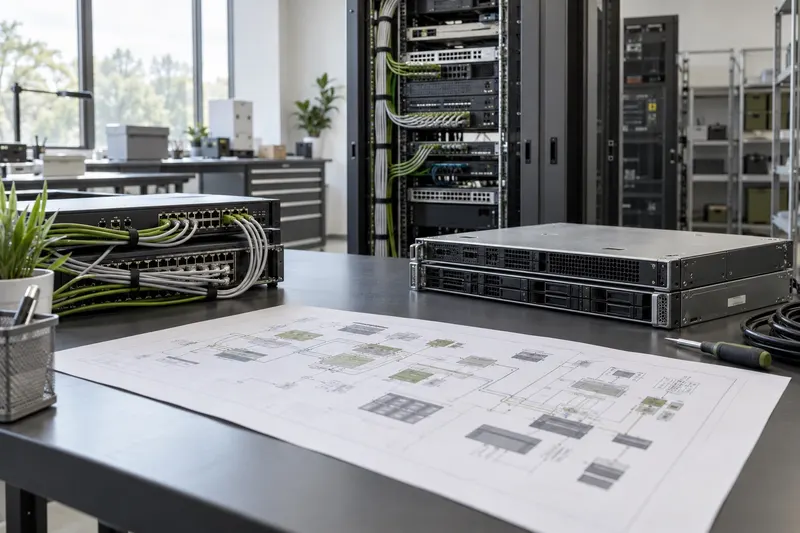
Cloud foundations that fit.
Shape architecture around workloads, dependencies, data, and operational needs.
- Cloud architecture and environment design
- Infrastructure as code and configuration
- Containers and workload orchestration
CLOUD · DEVOPS · RELIABILITY
Build cloud environments, automate delivery, and understand how your systems behave. Infrastructure shaped around your workloads and the people who operate them.
Discuss Your Infrastructure
KNAYK LABS designs cloud foundations, automates build and deployment pipelines, and implements observability and reliability practices for software products and platforms.
Shape architecture around workloads, dependencies, data, and operational needs.

Make builds, validation, and deployment repeatable, with appropriate review points.

Connect service signals to user impact and a practical response process.

Plan permissions and resource usage alongside the infrastructure.
Follow a change from application to cloud services, with operational signals feeding the next improvement.
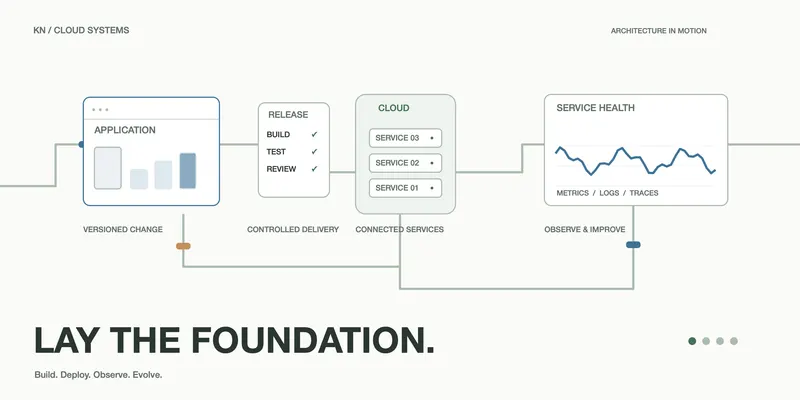
Build and validate a change, apply the agreed approval, then observe the rollout. Recovery is part of the plan.
Create a versioned artifact.
Run agreed checks.
Review before production.
Roll out the chosen version.
Check service health.
Follow a change from build to service health checks.
Health checks fail? Follow the agreed rollback or recovery path.Agree the operational deliverables alongside the build, with responsibilities your team can understand.
Deliverables, support hours, incident responsibilities, recovery targets, and any specialist assurance work are defined in the engagement scope.
Build a shared view of the system, validate changes, and make operational ownership explicit.
Map workloads, dependencies, access, operational risks, and current costs.
Agree environments, deployment paths, service objectives, and ownership.
Provision with code, connect delivery pipelines, and validate representative scenarios.
Review runbooks, monitoring, support boundaries, and improvement priorities.
A focused first engagement can clarify what needs changing before a wider implementation.
 Infrastructure assessment
For unclear architecture, rising cloud spend, or operational concerns.
Review agreed workloads, dependencies, permissions, costs, and known risks. Work toward prioritized findings and a practical improvement plan.
 Delivery pipeline review
For manual deployments, inconsistent environments, or difficult rollbacks.
Map the current release process and evaluate automation, validation, approvals, and recovery. Agree a focused pipeline improvement scope.
 Reliability review
For noisy alerts, unclear incidents, or limited service visibility.
Review representative service signals, incident patterns, alert ownership, and recovery readiness. Define useful objectives and next improvements.
We begin by reviewing the current setup, constraints, workloads, and access. Improvements can be scoped around your existing provider and tools; a migration is not automatically required.
The approach depends on the application, data, dependencies, and consistency requirements. We agree cutover, validation, rollback, and any expected interruption before changes are made.
Access is agreed for the work and should use named accounts, least privilege, and appropriate logging. Do not share credentials through the contact form.
We can review agreed usage, resource sizing, capacity, and operating patterns. Savings depend on workloads and constraints; findings should be checked against performance and reliability requirements.
Account ownership, code repositories, documentation, credentials, and handover responsibilities should be agreed in the engagement. We plan the operating model with your team.
Support coverage, response expectations, incident ownership, and any service commitments require an explicit agreement. They are not implied by an infrastructure implementation.
We can scope technical controls such as access, secrets, configuration, and logging. Regulatory interpretation, certification, specialist audits, and formal assurance require appropriate expertise and a separately agreed scope.
Share your environment, delivery bottleneck, or operational challenge. We’ll discuss a useful starting point.
Discuss Your Infrastructure